What Is Leasing Velocity? The Formula and How to Raise It

Contents
Leasing velocity is the number of net new leases an apartment community signs in a set period, usually per week or per month. It tells you how fast you're filling homes right now. That makes it the number to watch during a lease-up, after a wave of move-outs, or whenever you change your marketing.
A note on the name: Lease Velocity is also the name of the company that publishes this guide, an AI marketing platform for apartment communities. This article is about the metric.
What does leasing velocity measure?
Leasing velocity measures pace: how many leases you add per unit of time. Occupancy tells you where you stand. Velocity tells you how fast you're moving and in which direction.
Two communities can both be 88% occupied on the first of the month. One signed 14 leases in the past four weeks; the other signed 3. They are in very different positions, and only velocity shows it.
Most teams track it two ways:
- Weekly, during a lease-up or a recovery, when each week's result changes what you do next.
- Monthly, once a community is stable, when you're watching for drift.
How do you calculate leasing velocity?
Count the leases that will actually turn into move-ins, then divide by the time it took to get them:
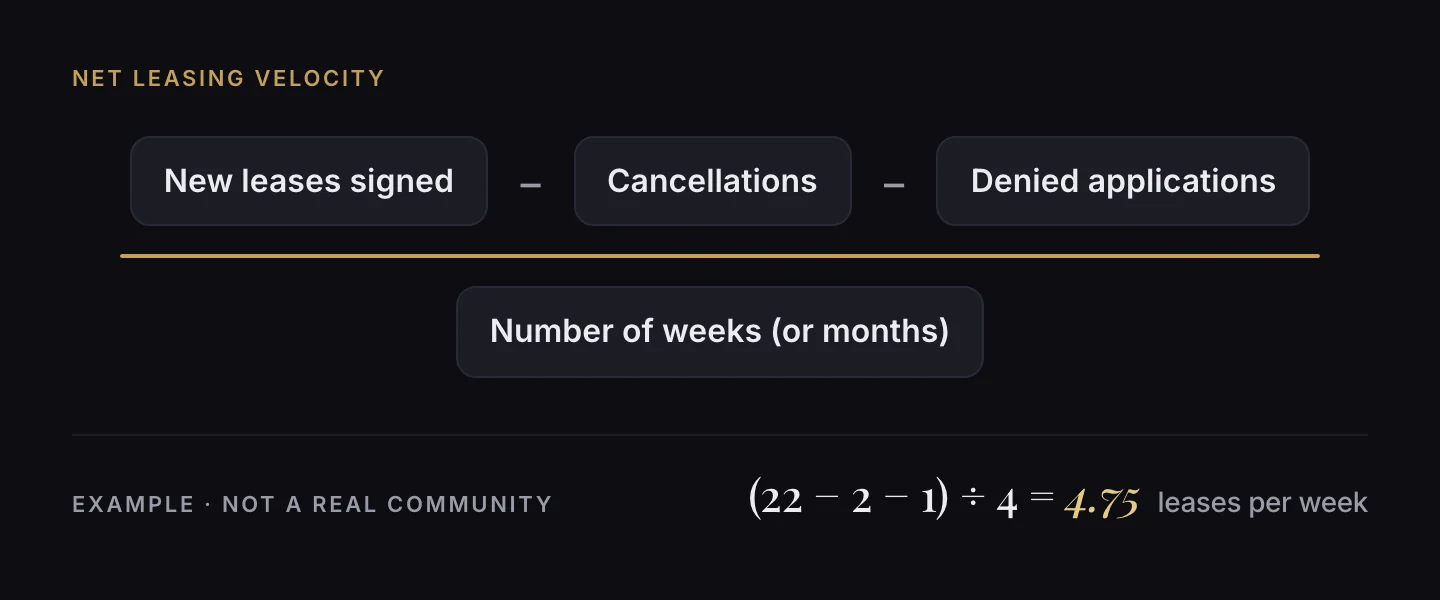
Net leasing velocity = (new leases signed − cancellations − denied applications) ÷ number of weeks (or months) in the period
A few rules make the number trustworthy:
- Use net, not gross. A signed lease that cancels before move-in didn't fill a home. Subtract it in the week it cancels.
- Keep renewals out. Renewals matter, but they don't fill a vacant home. Track renewal rate as its own number.
- Pick one date rule and stick to it. Count a lease on the day it's fully signed, not the day the application came in.
- Split by floor plan when it matters. A community leasing one-bedrooms quickly while its three-bedrooms sit can look healthy on a blended number.
Worked example (an example community, not a real one). Over four weeks, a 240-home community signs 22 new leases. Two cancel before move-in, and one application is denied after a signed lease is counted.
- Net leases: 22 − 2 − 1 = 19
- Net weekly velocity: 19 ÷ 4 = 4.75 leases per week
- Net monthly velocity: about 19 leases per month
How is leasing velocity different from absorption, occupancy and leased percentage?
These four numbers are related, and they get mixed up constantly. The short version: velocity is the pace of signing; absorption is net change in occupied homes; occupancy and leased percentage are snapshots.
| Metric | What it measures | Formula | When it misleads |
|---|---|---|---|
| Leasing velocity | Pace of net new leases | net new leases ÷ time | When renewals or cancelled leases are counted in it |
| Absorption | Net change in occupied homes over a period | move-ins − move-outs (for a stabilized community); for new construction, the share of new homes rented within a set time | When move-outs are high, because strong signing can still mean flat absorption |
| Occupancy | Homes with a resident living in them today | occupied homes ÷ total homes | Ignores signed leases that haven't moved in yet |
| Leased percentage | Homes that are occupied or have a signed future lease | (occupied + pre-leased) ÷ total homes | Ignores notices to vacate that haven't happened yet |
The U.S. Census Bureau's Survey of Market Absorption (SOMA) uses the new-construction meaning of absorption. It tracks new apartments in buildings with five or more units and records how many are "taken off the market (absorbed)" in the months after completion.
What is a good leasing velocity?
There is no universal "good" number. Velocity depends on the size of the community, how many homes are vacant, the season, and how much new supply is competing nearby. The only fair benchmark is your own history and your own submarket.
One national reference point is useful for lease-ups. According to Census SOMA data as reported by the National Association of Home Builders, 41% of apartments completed in the first quarter of 2026 were rented within three months of completion. Put another way, most new homes nationally were still unleased three months after they were finished. A slow first quarter is common, not proof that something is broken.
For a stabilized community, the useful question is narrower: is net velocity keeping up with move-outs? If 10 residents give notice this month and you sign 7 net new leases, occupancy is going to fall no matter how good the 7 look.
How long will a lease-up take at my current velocity?
Divide the homes you still need to lease by your net monthly velocity:
Months to target = (target leased homes − currently leased homes) ÷ net monthly velocity
Worked example (same example community). The owner's target is 228 of 240 homes leased. Today 150 are leased, and net velocity is 19 a month.
- Homes still needed: 228 − 150 = 78
- Months to target: 78 ÷ 19 ≈ 4.1 months
Use the stabilization target in your own business plan or loan documents. It's a number your owner or lender sets, not a universal constant. Rerun the math every week: if velocity drops to 12 a month, the same 78 homes take 6.5 months, and that difference is what the marketing budget conversation should be about.
Which numbers predict leasing velocity before it moves?
Velocity is the output of the leasing funnel, so it reacts late. The numbers above it move first:
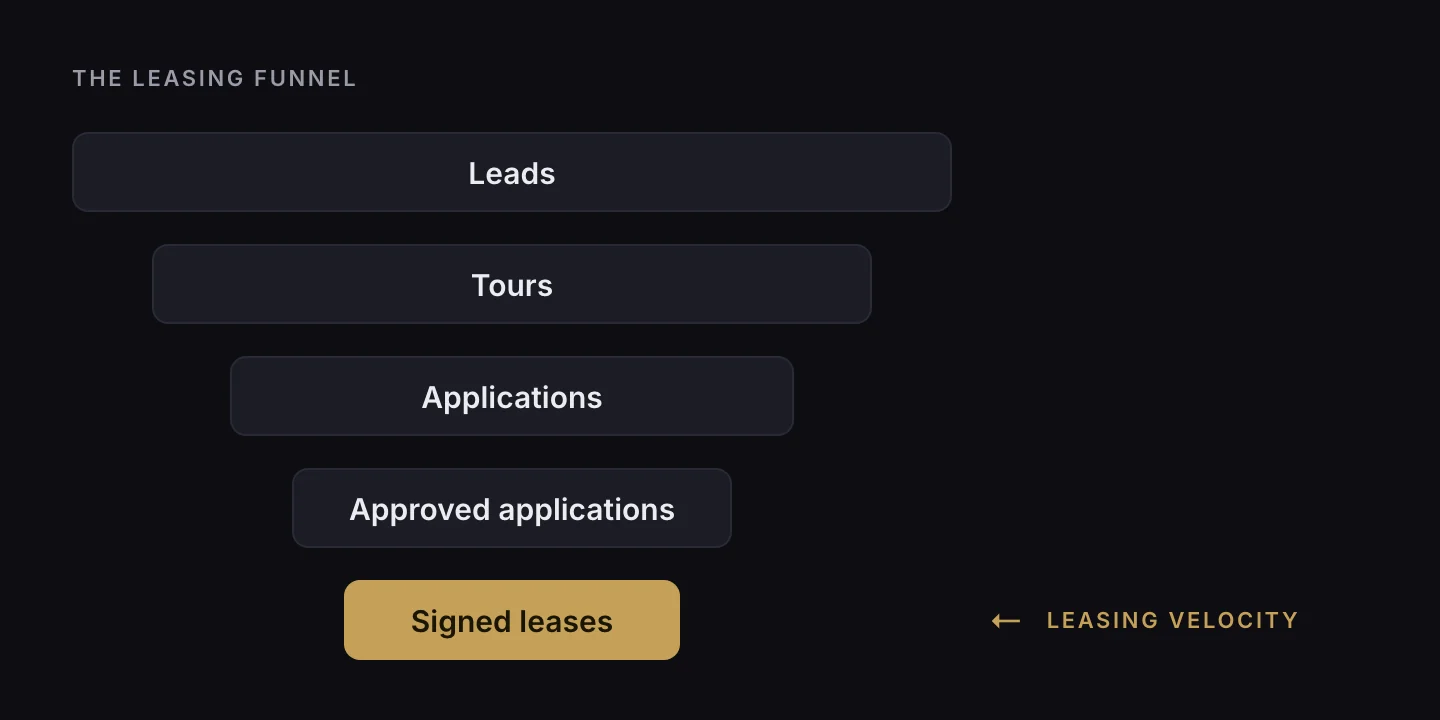
- Leads: inquiries from every source (calls, forms, messages, walk-ins).
- Tours: in-person, self-guided or virtual.
- Applications.
- Approved applications.
- Signed leases: this is where velocity is measured.
Track the count at each step weekly, and the conversion rate between steps. When velocity falls, the funnel tells you where: fewer leads is a marketing problem, while leads that don't become tours is usually a follow-up or pricing problem. Fix the step that broke, not the one that's easiest to change.
What marketing levers actually move leasing velocity?
Marketing moves velocity by putting the right homes in front of the right number of nearby renters, consistently, without breaking fair-housing rules. These are the levers worth working, roughly in order of how directly they connect to signed leases.
Show up where renters search locally
Google says its local results are "mainly based on relevance, distance, and popularity". It also says that "more reviews and positive ratings can help your business's local ranking" and that replying to reviews shows you value the feedback. A complete, active Google Business Profile with current photos and replied-to reviews is the cheapest visibility a community can earn.
Market the homes you actually need to lease
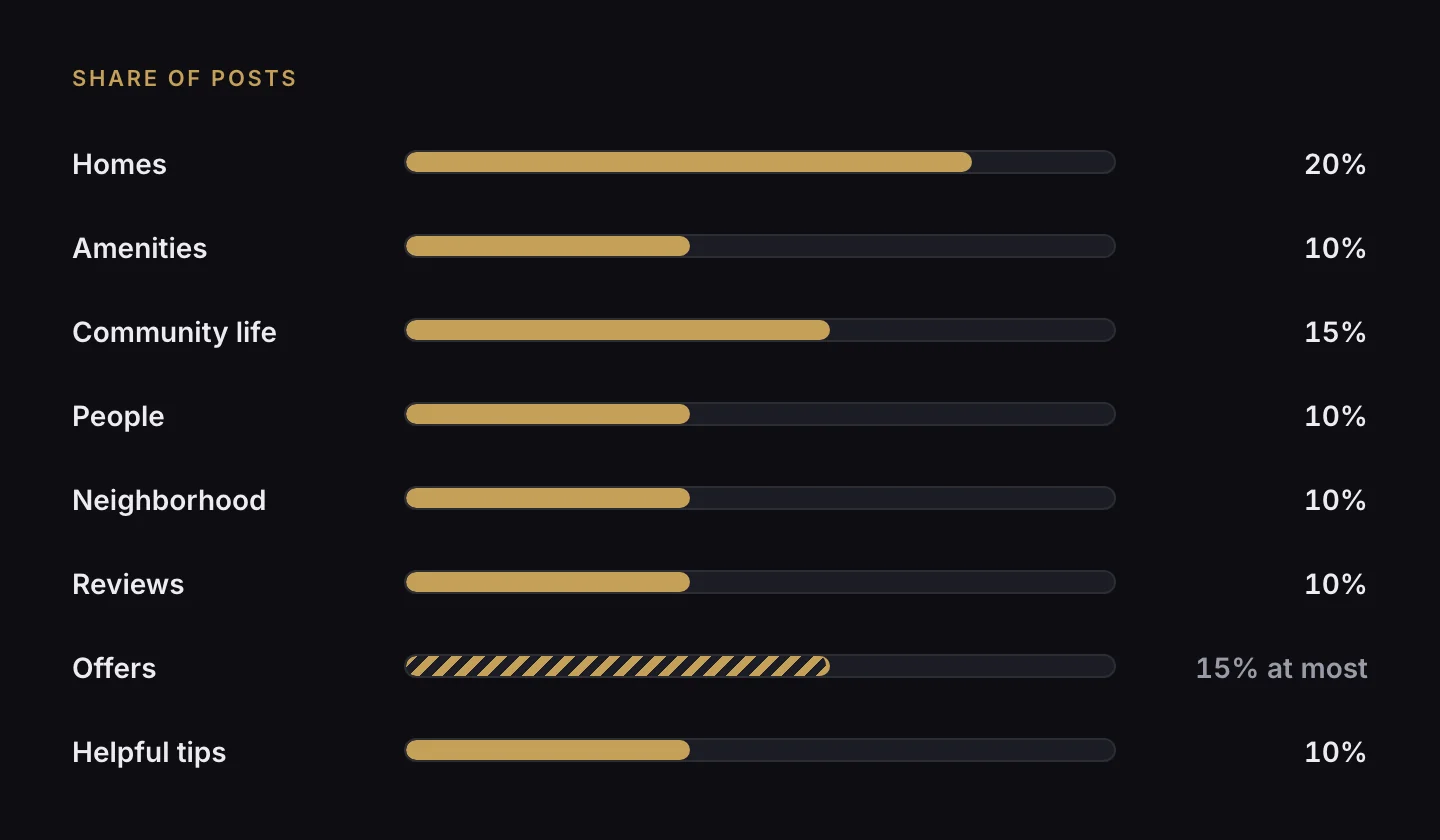
Generic "amenity of the week" posts don't move a lagging floor plan. If three-bedrooms are the slow ones, the next month of posts and ads should show three-bedrooms: the floor plan, the rooms, the move-in date. Lease-up communities lean on availability, floor plans and the neighborhood. Stabilized communities lean on resident life and reviews. Our 36 apartment social media post ideas are sorted by exactly these goals.
Use paid reach inside the housing-ad rules
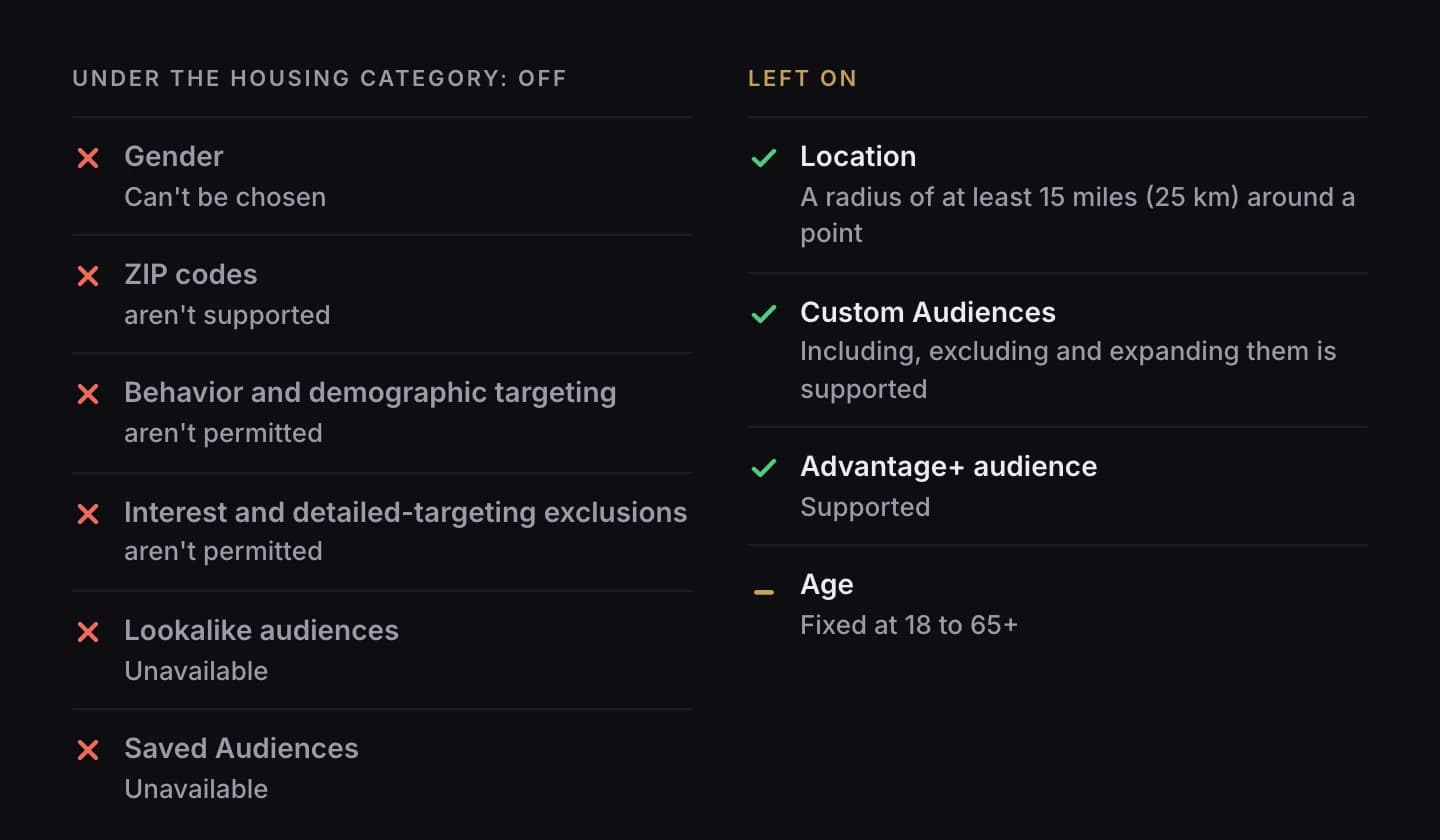
Paid social and search can add leads quickly, but housing ads run under special rules:
- Meta. Housing ads must use Meta's Special Ad Category. The developer documentation says:
- age is "generally fixed to include ages 18 through 65+";
- gender can't be chosen;
- location must cover at least a 15-mile radius in the US;
- ZIP-code targeting and lookalike audiences are unavailable.
- Google. Its housing ads policy restricts age, gender, parental status, marital status and ZIP-code targeting in the US and Canada.
So on both platforms, creative and geography do the work: the picture, the words, the offer and the radius. Our guide to fair housing rules for apartment ads and social posts covers what that means for your copy.
Be consistent for longer than feels necessary
Velocity reacts to marketing with a lag: a renter who sees a post today can tour weeks later and sign weeks after that. A community that posts in bursts and goes quiet for weeks makes its own funnel harder to read. Steady weekly output makes cause and effect visible.
Keep the copy fair-housing safe
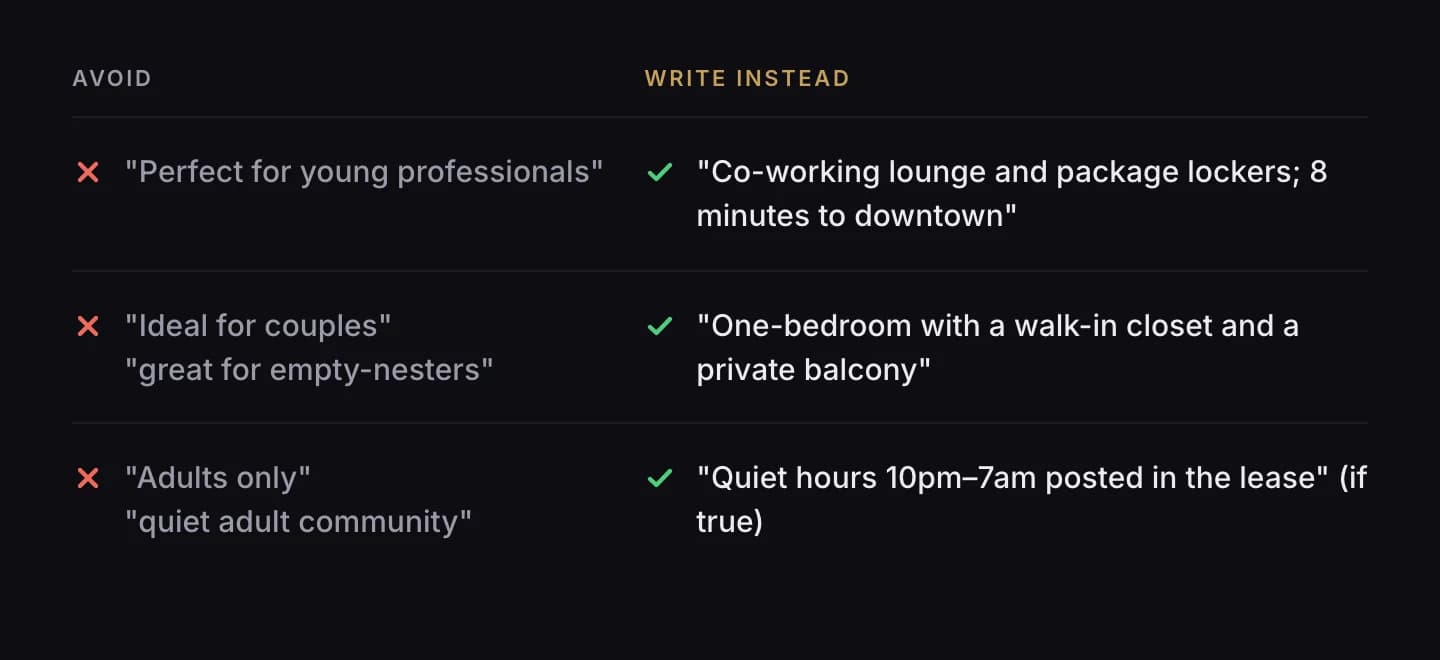
A post that says a home is "perfect for young professionals" doesn't just risk a complaint. It also tells everyone else the home isn't for them. Describe the home and the location ("two blocks from the Green Line; in-unit washer and dryer"), never the person you imagine living there.
How should you track leasing velocity each week?
A spreadsheet is enough. One row per week, these columns:
| Week of | Leads | Tours | Applications | Approved | Signed | Cancelled | Denied | Net | Move-outs | Notes |
|---|
Add a 4-week rolling average of the Net column, because single weeks are noisy. Then add a Notes column for anything you changed: a price move, a new ad, a special, a photo refresh. After a couple of months, the notes next to the jumps and dips are the most useful marketing record you have.
What are the most common leasing velocity mistakes?
- Counting gross leases. Cancellations and denials hide inside a good-looking number.
- Mixing in renewals. Renewals keep homes full; they don't fill empty ones.
- Blending floor plans. One fast unit type can mask a stuck one.
- Reading one week. Use the rolling average before reacting.
- Ignoring move-outs. Velocity that trails notices to vacate means occupancy is falling.
- Crediting one channel. Renters see a post, search on Google and then call. Look at the funnel, not just the last click.
Where Lease Velocity fits
Lease Velocity is AI marketing for apartment communities. It reads your property and writes, schedules and publishes a month of social posts, lead ads and email, after you approve them. A generated post is a draft until you approve it, and paid campaigns spend nothing until you approve them. The goal is the steady, specific, fair-housing-aware marketing this article describes, without a property manager having to write it from a blank page.
Sources (fetched 2026-10-07)
- U.S. Census Bureau, Survey of Market Absorption of New Multifamily Units (SOMA), program page.
- National Association of Home Builders, Eye on Housing, "Multifamily absorption rate remains below 50%" (August 2026), reporting Census SOMA data for Q1 2026 completions.
- Google Business Profile Help, "Tips to improve your local ranking on Google".
- Meta for Developers, "Special Ad Category".
- Google Ads Help, housing ads targeting policy.
Related
Lease Velocity